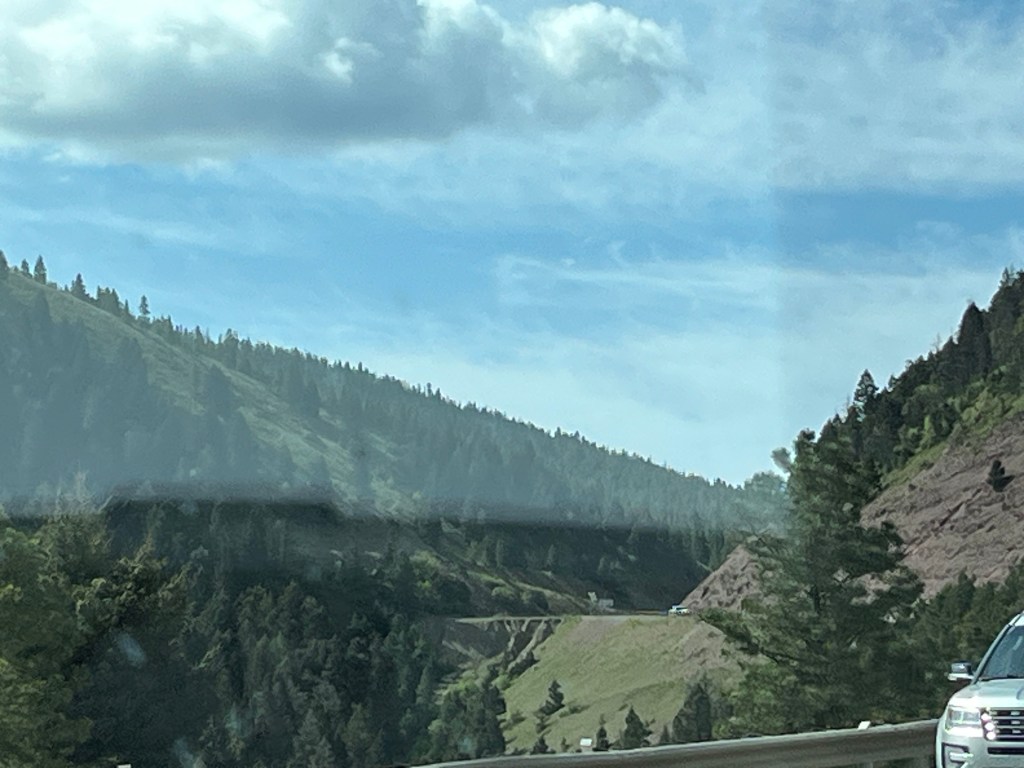
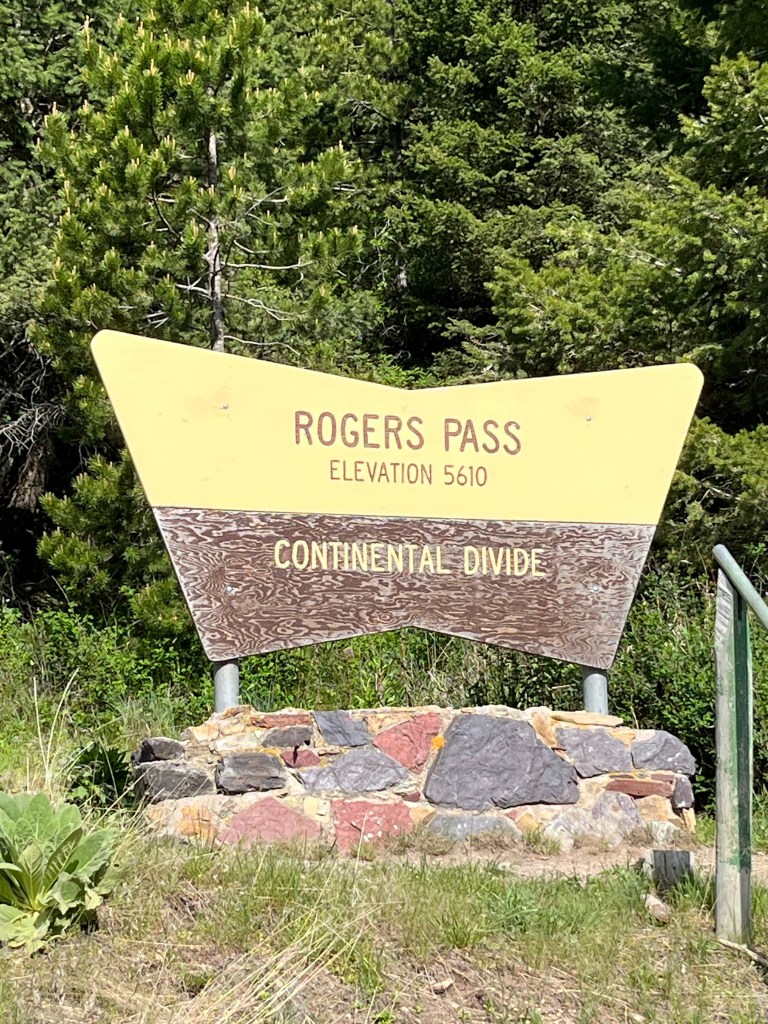
We left the area of the Glacier National Park and drove south towards Yellowstone. Our first interesting scenic view was driving through Rogers Pass. This mountain pass rises 5,610 feet above sea level and was one of the first few passes through the mountain range on the Continental Divide. It is named after A.B. Rogers, a surveyor for the railroads, who found the pass in the 1880s as a possible location for a railroad to the west. The pass is adjacent to Helena National Forest and is the site of the coldest temperature ever recorded in the lower 48 states, -70 degrees, on January 20, 1954.
From there we continued south to Helena, Montana. With a population of only 32,000, it is still the fourth largest city in the state and serves as the state capital. The city’s name was chosen in 1864 after being suggested by a resident who previously lived in a town in Minnesota with the same name.
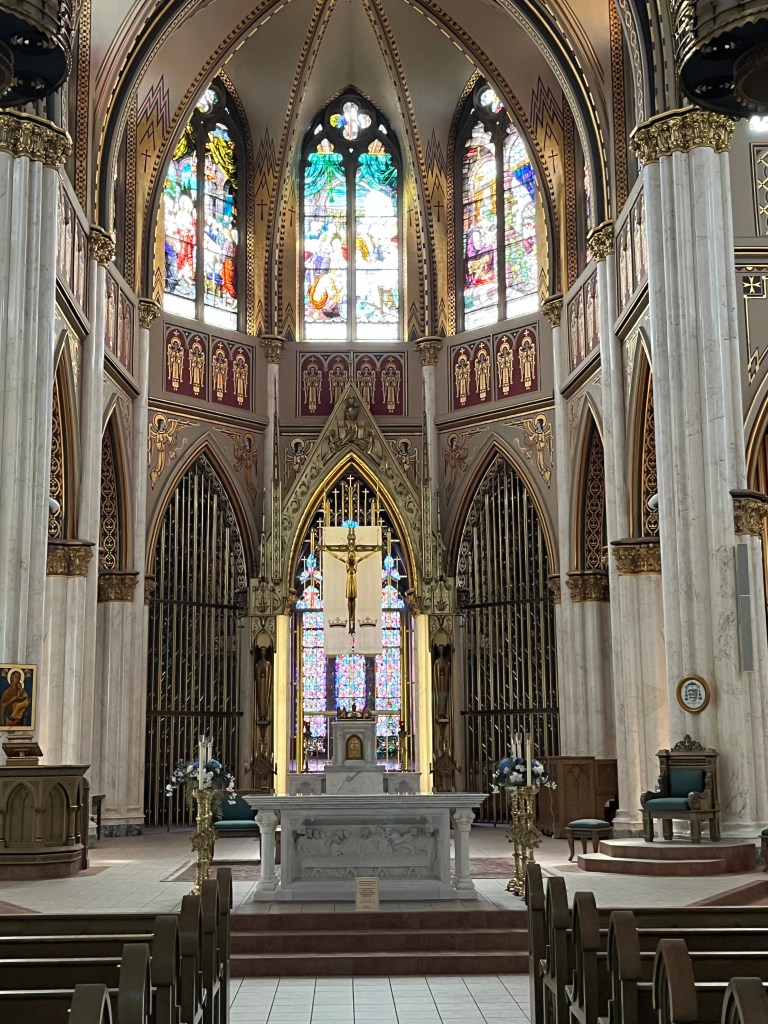
We stopped off to view the Cathedral of Saint Helena, which was on my list of the most beautiful Catholic churches in the country. It was constructed in 1914 and was added to the National Register of Historic Places in 1980. The cathedral’s most prominent feature is its 230-foot twin spires, which were inspired by the Votivkirche Church in Vienna, Austria. Although conveniently bearing the same name as the city, the church is named after Saint Helena, a Roman Empress of the 4th century and the mother of Constantine the Great.
From Helena, we drove to Bozeman-Yellowstone International Airport, where Sean left the trip to fly back home. My week with Sean was fantastic, because of his company, his help in organizing my trailer, and sharing the driving and dog walking. Together we saw some of the best stops on my journey, including Crater Lake, Mount Rainier, and Glacier National Park. I will miss having him with me on the rest of my trip. However, I can’t say that he was a “lucky charm,” because in the week he was with me, the toaster died, the tow hitch almost fell off my Kia, the trailer jack was destroyed going over a curb, and we blew out a tire on the trailer. However, none of these were Sean’s fault, and he helped me weather each of these mini-storms, and none had a major impact on completing the trip.
After dropping Sean off, I stopped at a tire store and bought a new spare for the trailer and then continued down south. The entire drive the rest of the way was along U.S. 191, also known as the Gallatin Trail for this stretch. It also parallelled the Gallatin River. At one point, I stopped to walk the dogs, having to pull heartily on Gipper who wanted to head straight for the river. I did take a picture of the river first, but while walking the dogs I saw a group of at least 50 teenagers who were on a group white water rafting trip. They landed right at the bend of my posted picture and boarded a school bus which pulled the rafts on a trailer behind it. As I followed the river for the rest of the trip, I could see it was a great river for a not-too-wild rafting trip.
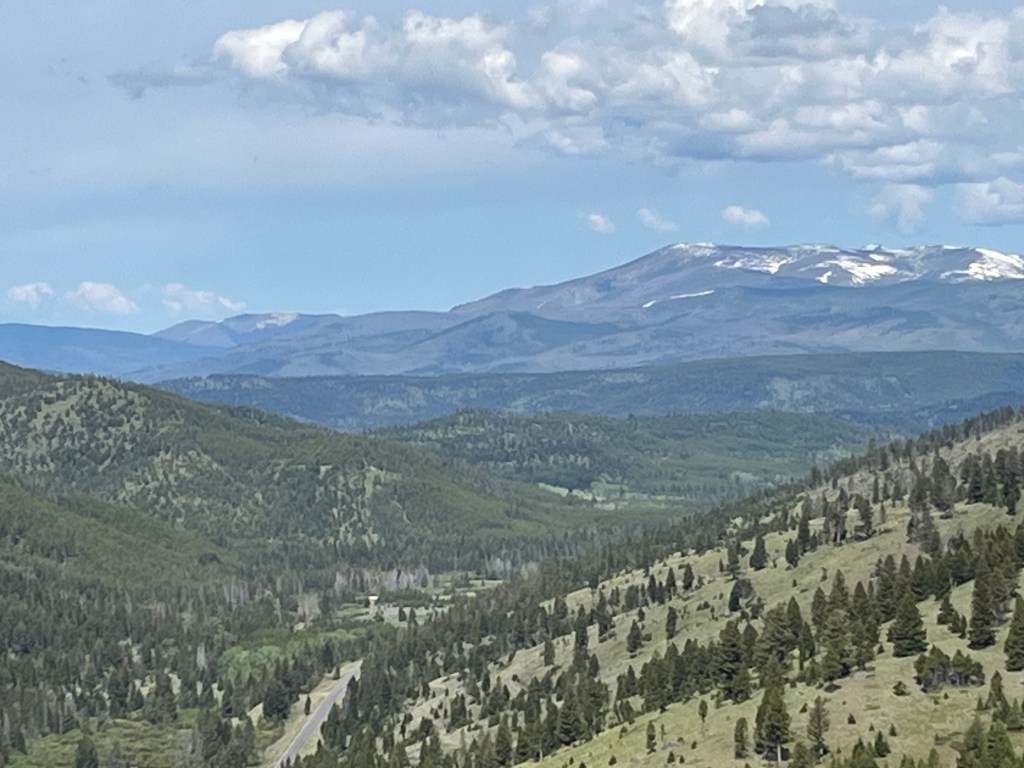
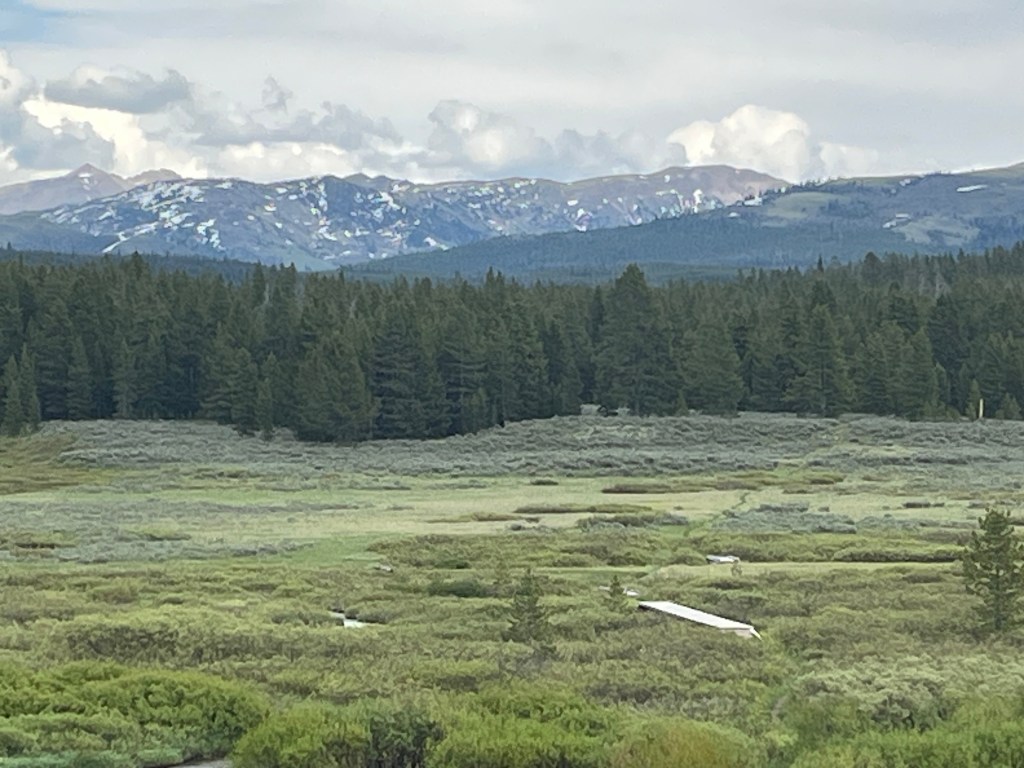
Nearing the end of my drive, the road took me slightly into the western side of Yellowstone for a short stretch, and I stopped to take a picture of the view from the Fawn Pass Trailhead. I then drove to my campsite in the Bakers Hole Campground in the Custer Gallatin National Forest, just north of West Yellowstone in Montana, and right outside the West Entrance to Yellowstone National Park, one of my places to visit as I start week 7 tomorrow.
Posted pictures include a view and a sign from Rogers Pass, a scenic view of a valley in the early part of the trip, photos of the church, my new spare tire (I don’t like the white rim, but had no other choice), a picture of the Gallatin River, and a view from the Fawn Pass Trailhead.



 Discover America 2025
Leave a comment