Up until today, I have not had a single day of rain. But after I completed today’s plan, I gathered my laundry and headed for a laundromat in West Bend, Iowa. As soon as I got all my things in the building, the weather turned from clear and sunny to pouring rain and thunder. This is a small town, and no one else is in the laundromat, so I brought the dogs in with me. That is a good thing too, because Gipper is terrified of thunder, but with the washing machines running, he hasn’t really noticed. So, I am sitting in the laundromat, writing today’s blog.
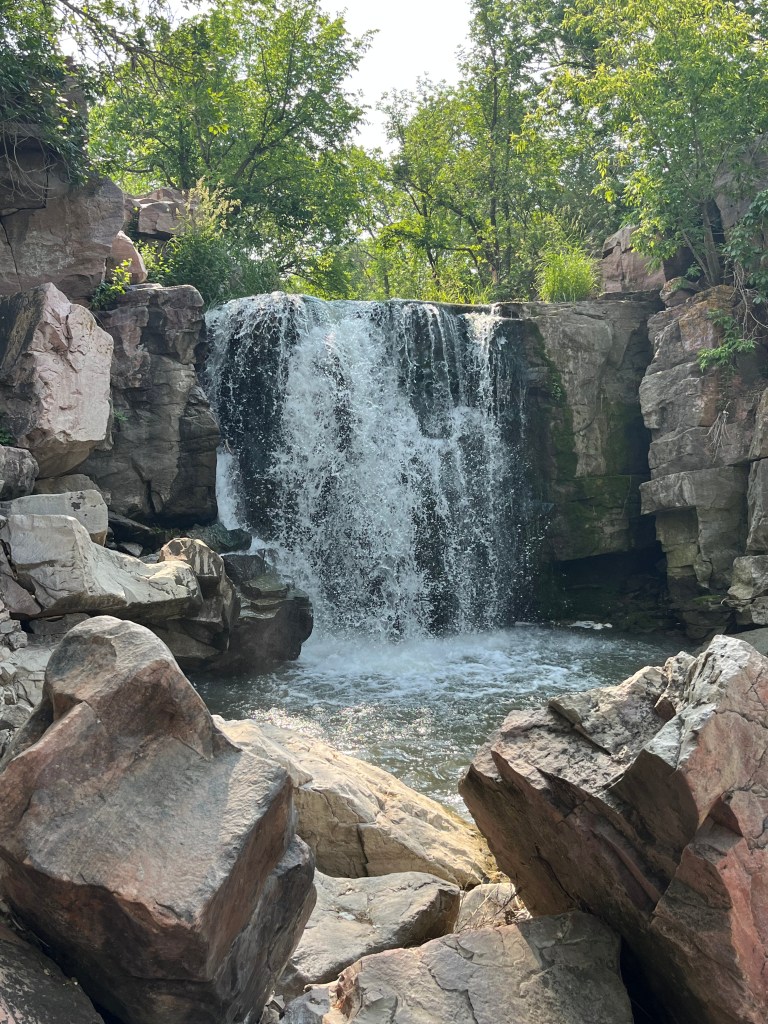
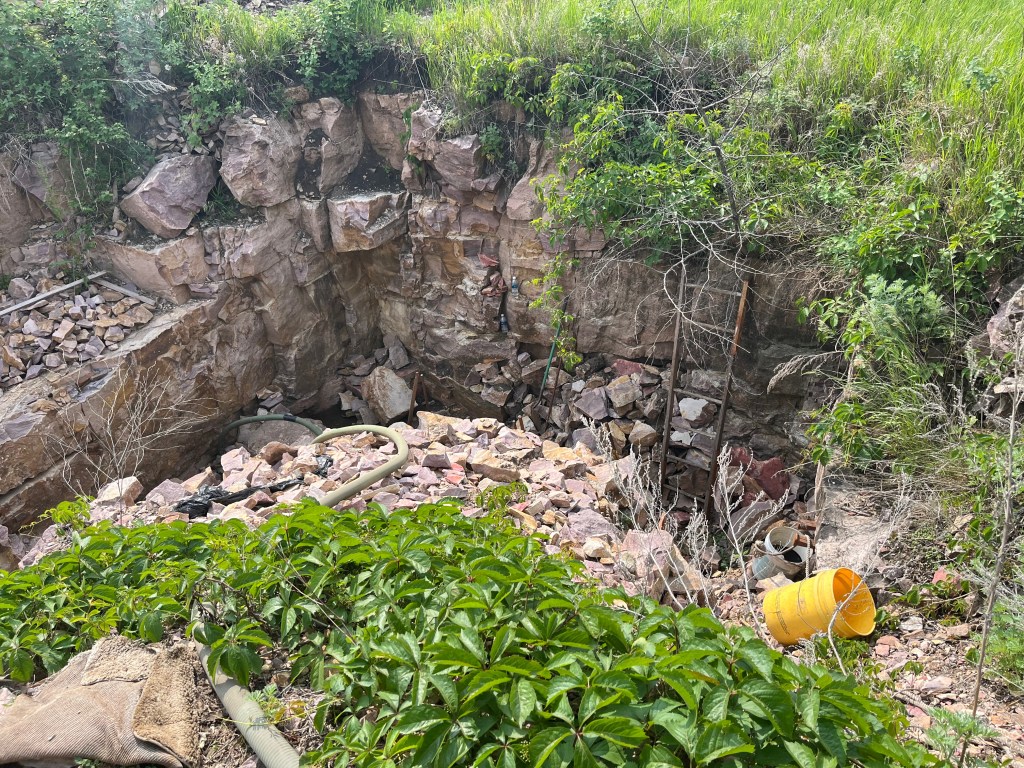
Early this morning, I left the Blue Mounds State Park and drove up north for thirty miles to the Pipestone National Monument. This is one of the smallest and most unusual parks in the National Park Service inventory. It is dedicated to honoring the Native Americans through recognizing their tradition of quarrying stones used in carving pipes for prayer and ceremony (hence, “pipestone”). In the planning and operation of the monument, the National Park Service engaged in formal government-to-government consultations with 23 affiliated tribal nations based on their historic connections to the quarry, pre-dating the establishment of the monument. They still allow people to register to quarry the area, and the Visitor Center includes native artists in residence to demonstrate their craft in action. Three such people were working there when I visited. I took the dogs for a walk on their one-mile trail to see some of the quarry areas and hike past the Winnewissa Falls on the Pipestone Creek.
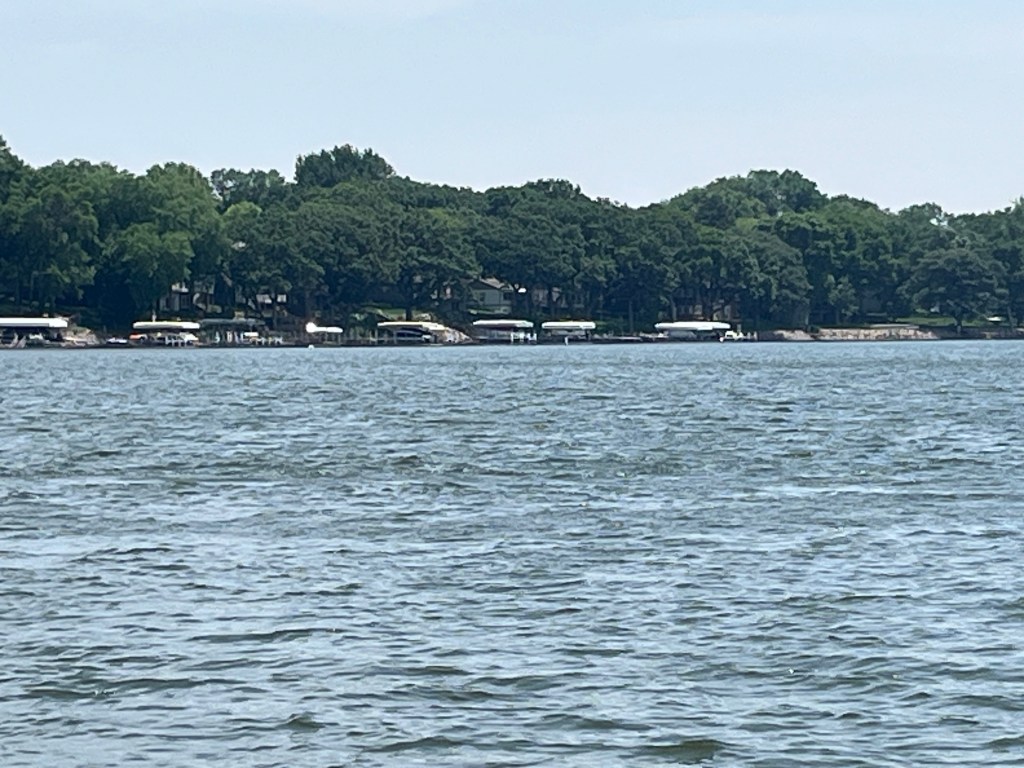
I then headed south and crossed into Iowa, state number 29 in my journey through the lower 48. I passed by the large East Okoboji Lake, so I stopped for a few photos. This appears to be a general recreation area, with an active marina and a large Lutheran Church camp area.
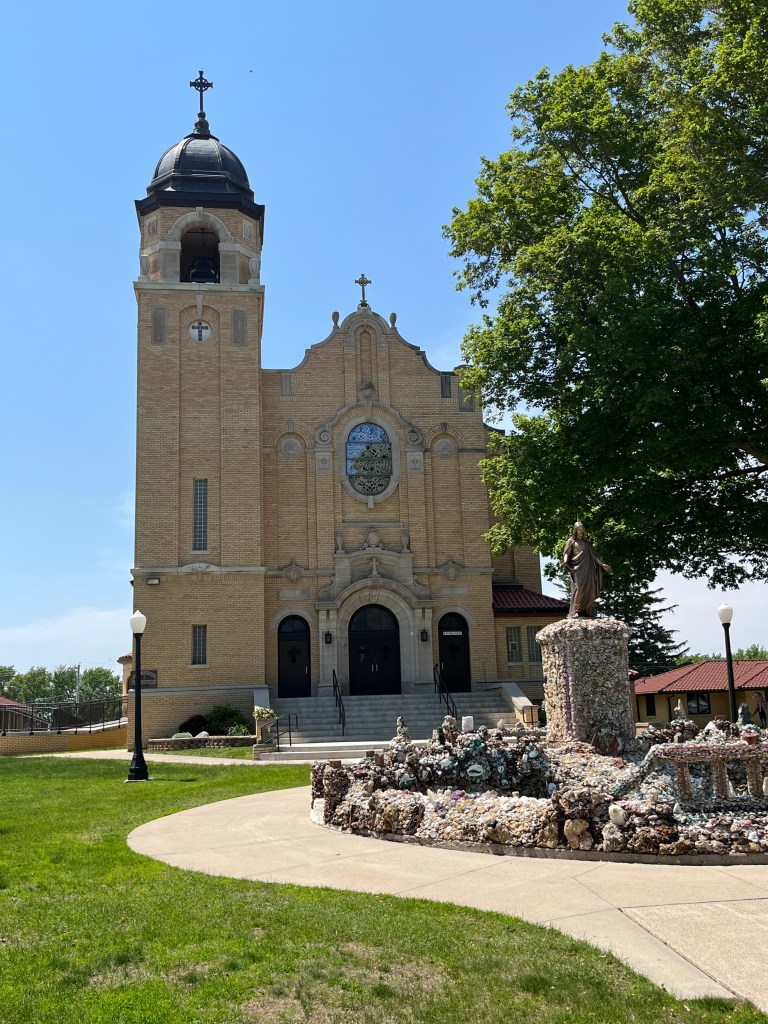
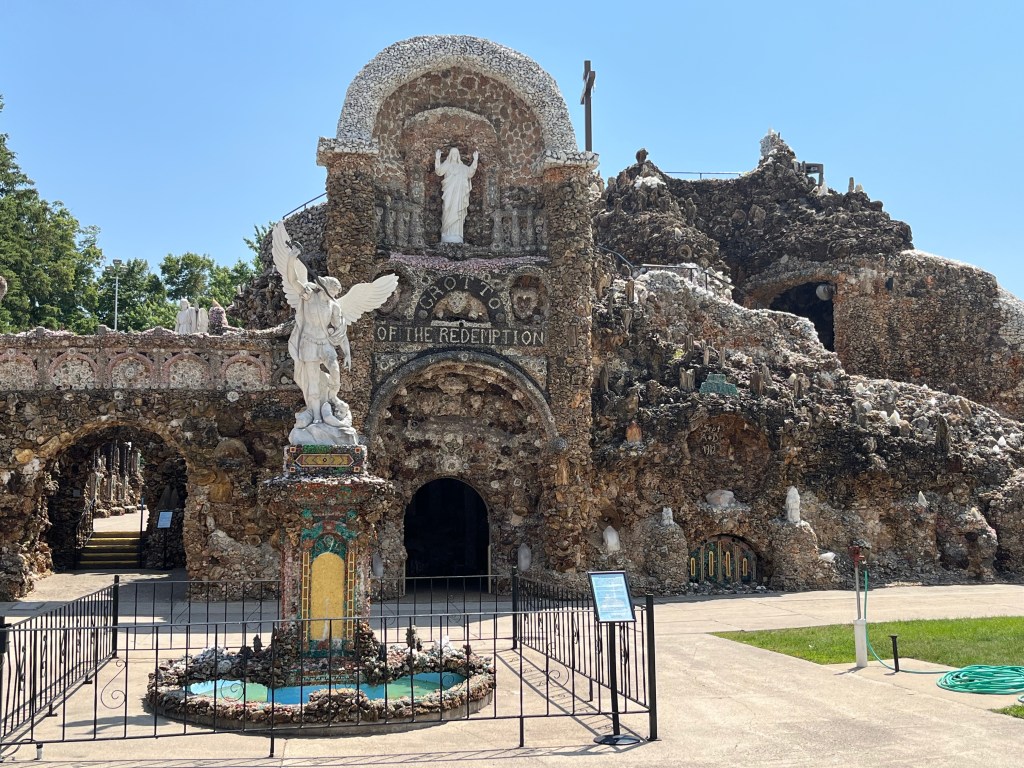
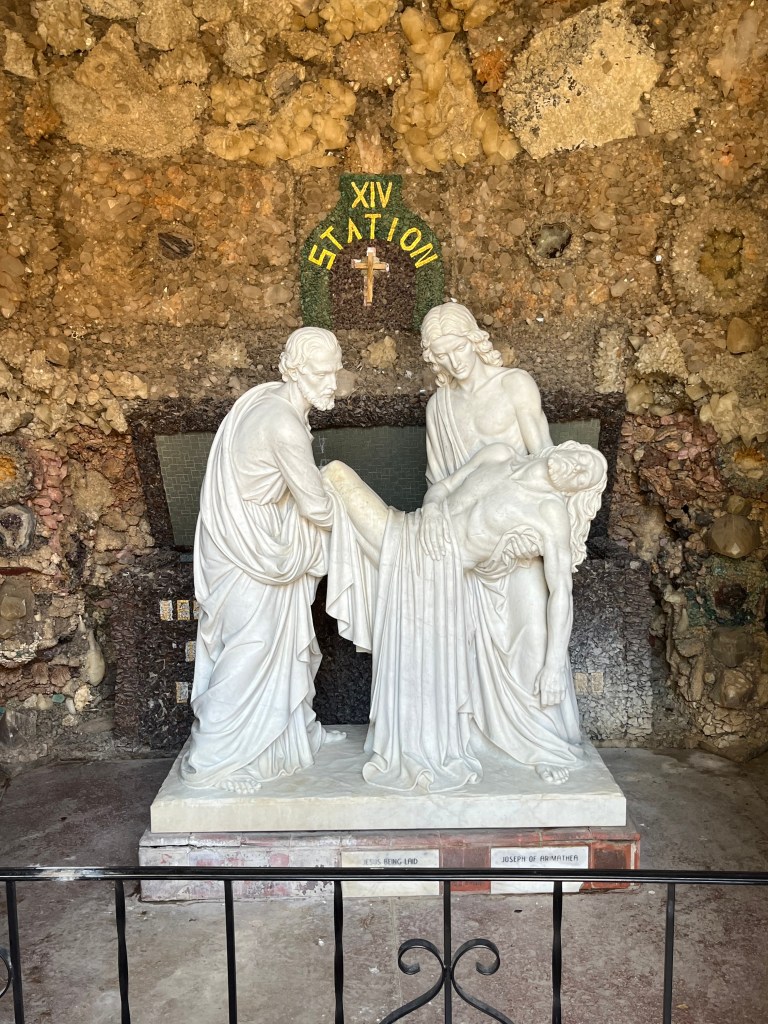
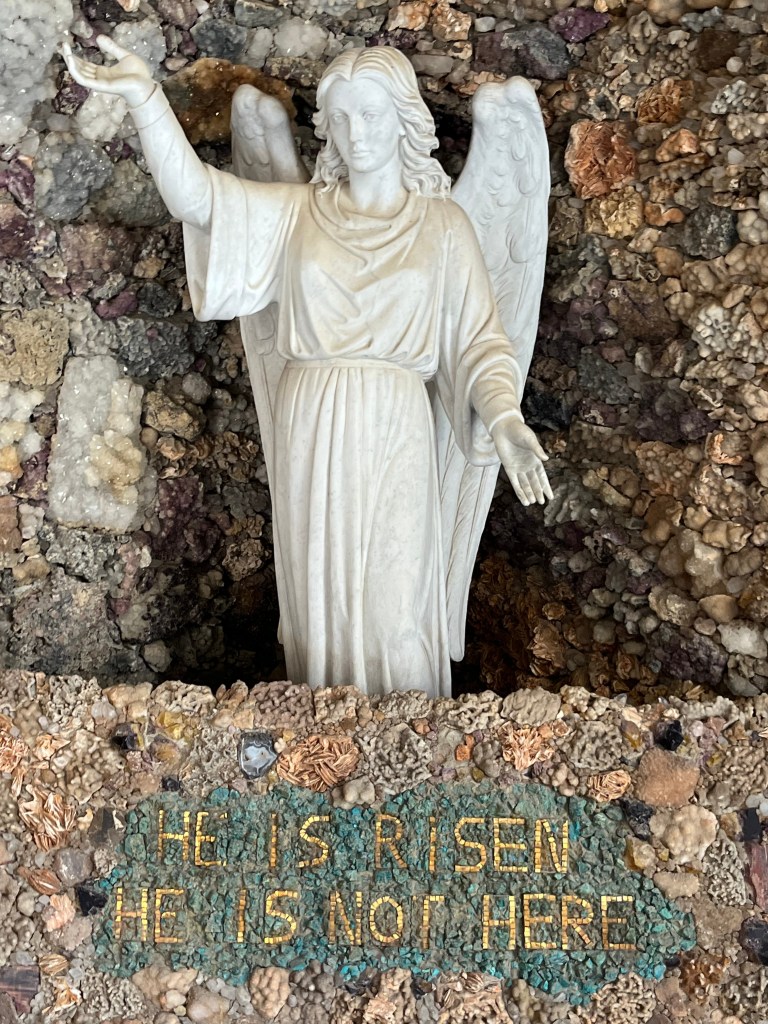
After another hour, I arrived in West Bend to visit the Shrine of the Grotto of the Redemption in West Bend, next to the Saints Peter & Paul Catholic Church. It has quite a history. A young seminarian, Paul Matthias Dobberstein, became critically ill with pneumonia. As he fought for his life he prayed to the Blessed Virgin Mary to intercede for him for the grace of health. He promised to build a shrine in her honor if he lived. The illness passed, the student completed his studies and after his ordination, he came to West Bend as Pastor in 1898. For over a decade he was stockpiling rocks and precious stones. Father Dobberstein used a vast collection of minerals and precious and semi-precious stones in the building of the Grotto, including petrified wood, malachite, azurite, agates, geodes, jasper, quartz, topaz, calcite, stalactites, and stalagmites. The result is the largest man-made grotto in the world and home to one of the largest collections of precious stones and gems found anywhere in one location! It is a composite of nine separate grottos, each one displaying a scene in the life of Christ. It also includes a path of the 14 “Stations of the Cross,” leading to a grotto displaying Station 14, Jesus’ body being laid in the tomb after his crucifixion.
I just finished the blog, and Gipper is indeed shaking a bit. Luckily, the storm has passed, so I will head for my campsite at the Grotto property.
I posted photos of the Pipestone waterfall, one of the small quarries, the lake, the church next to the grotto, and a few of the grotto itself.
 Discover America 2025
Leave a comment