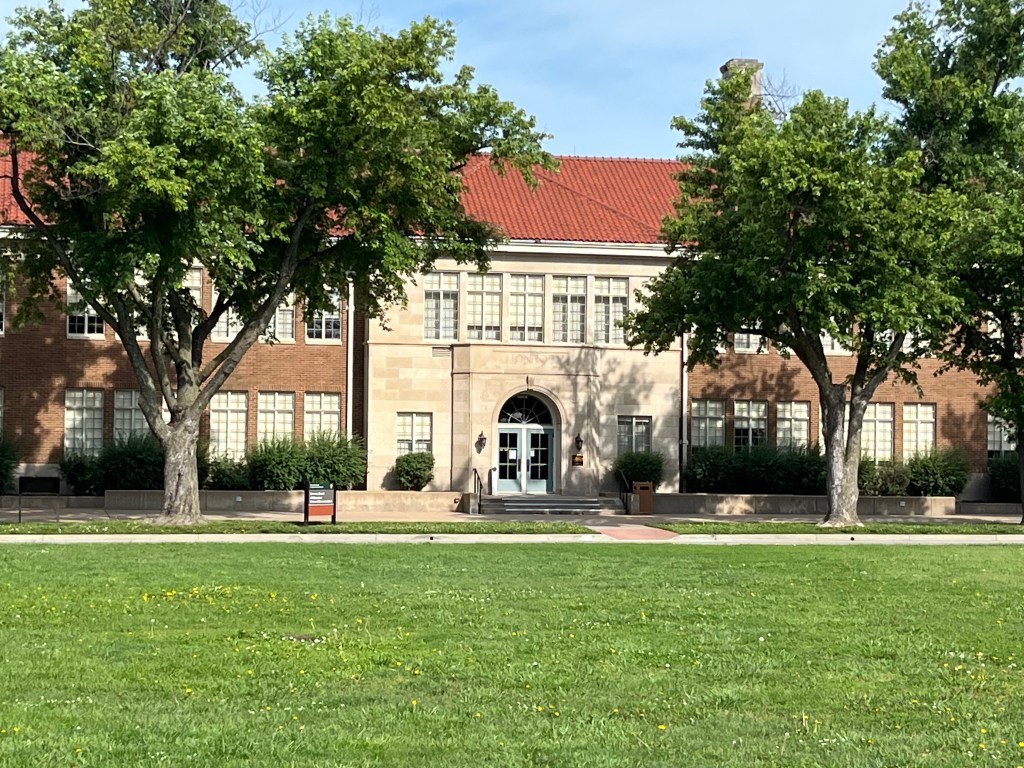
From the Tuttle Cove campground, I drove towards Topeka and saw the State Capitol Building and then visited the Brown vs Board of Education National Monument, which included a museum describing the history of perhaps the most significant event in the Civil Rights movement. I learned things I had not known before. I did not realize that the decision was actually made with respect to five cases: Brown v. Board of Education of Topeka, Kansas (the name case), Briggs v. Elliott (South Carolina), Davis v. County School Board of Prince Edward County (Virginia), Gebhart v. Belton (Delaware), and Bolling v. Sharpe (Washington, D.C.). These cases challenged the constitutionality of segregated public schools under the “separate but equal” doctrine. The monument is housed in the former Monroe Elementary School, where the issue began. “Brown” refers to Oliver Brown, a parent and one of the plaintiffs in the case. Oliver Brown’s daughter, Linda Brown, was denied access to the all-white Sumner Elementary School in Topeka, Kansas, because of her race. This led to Brown and other parents challenging the school board’s segregation policy in court in 1951. Thurgood Marshall, the head of the NAACP Legal Defense and Educational Fund at the time, served as chief attorney for the plaintiffs.
In the unanimous decision, issued on May 17, 1954, the new Chief Justice, Earl Warren, wrote that “in the field of public education the doctrine of ‘separate but equal’ has no place,” as segregated schools are “inherently unequal.” As a result, the Court ruled that the plaintiffs were being “deprived of the equal protection of the laws guaranteed by the 14th Amendment.” The court overturned the 1896 Plessy v. Ferguson decision which established the “separate but equal” doctrine, which allowed states to maintain racially segregated public facilities as long as they were of equal quality. I apologize for the history lesson, but I found the information extremely interesting.
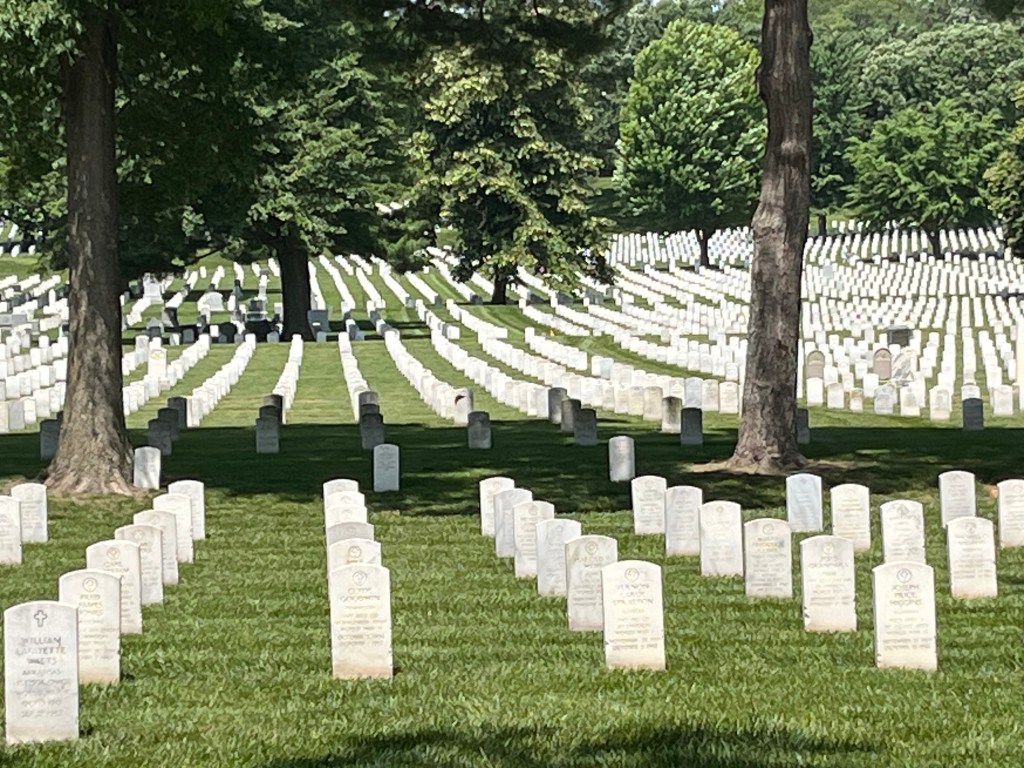
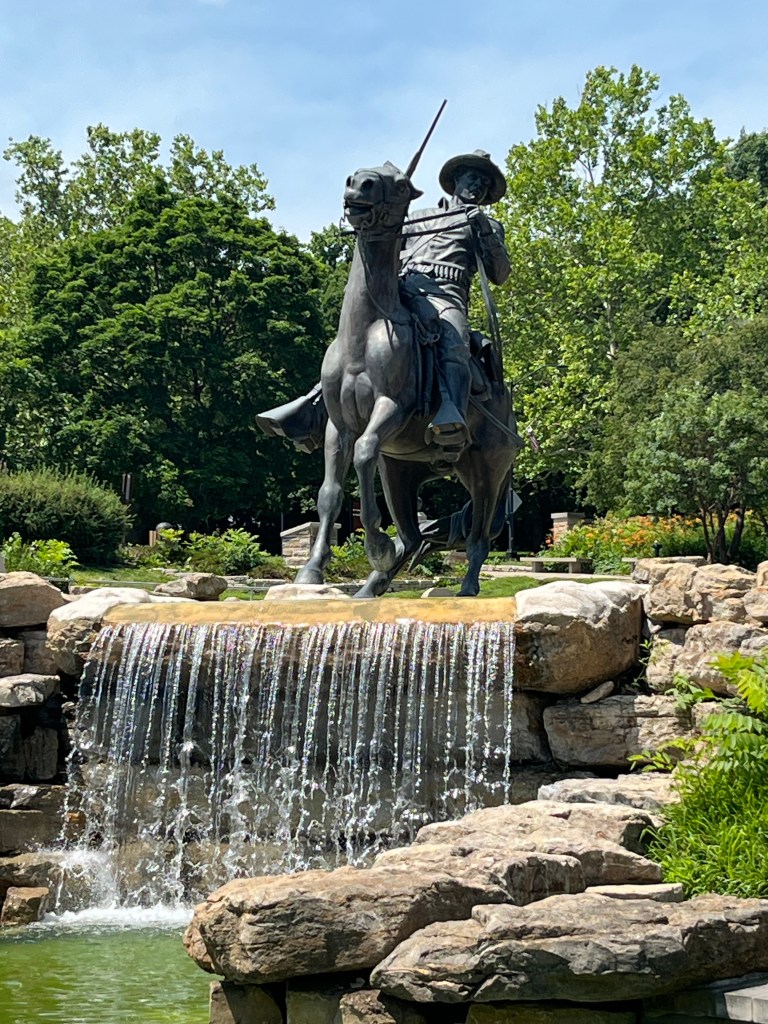
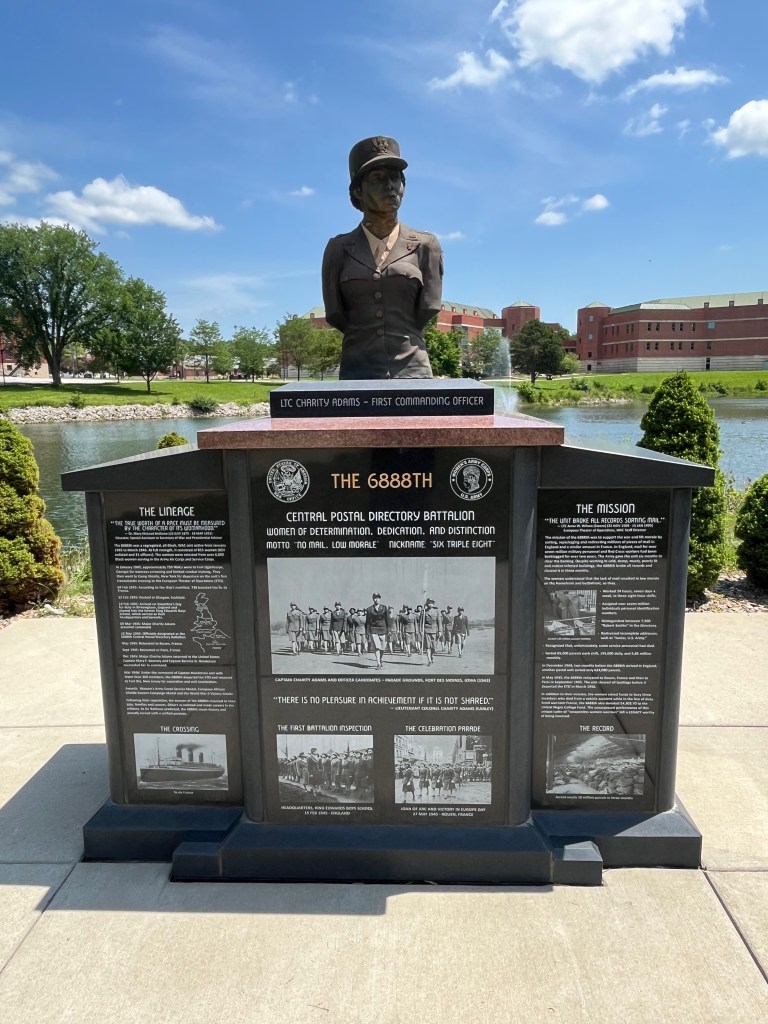
I then drove to Fort Leavenworth, which my friend Chip Paxton suggested I add to my list. I first visited the base museum and picked up a map that highlighted the best things to see. One of the sights was an overlook of the Missouri River which runs alongside the compound. I also passed the Leavenworth Cemetery and then finally drove to the Buffalo Soldiers National Monument. This site also included a statue and description of the 6888th Central Postal Directory Battalion, an all-female group deployed to Europe in World War II.
As a college football fan, I passed through a number of cities that reminded me of how messed up the sport has become. The cities were Lincoln (in Nebraska), Manhattan and Lawrence (in Kansas) and Columbia (in Missouri), which are the locations for Nebraska U, Kansas State, Kansas, and Missouri U, respectively. From 1928 until 2011, they were conference rivals in the Big Six Conference, which eventually became the Big 12. They were natural rivals, all within a few hours of each other. But in the past 15 years, the NCAA has had massive conference realignments, and Nebraska is now in the Big Ten, and Missouri is in the Southeast Conference. Other strange realignments have Cal Berkely and Stanford in the Atlantic Coast Conference. Natural rivalries have gone by the wayside. To top it off, just last week, a federal judge approved a settlement between the NCAA and former college athletes wherein the NCAA has agreed to provide $2.8 billion in back pay to former and current college athletes, while allowing schools to directly pay athletes for the first time. The world gets crazier every day.
I drove for three hours further in Missouri to get to the Meramec State Park Campground. Along the way, I crossed the Missouri River for the third time today, and fifth time overall. I might even cross it again as I head towards Saint Louis tomorrow.
Photos include the state capitol, the Monroe School, the Leavenworth Cemetery and two pictures from the Buffalo Soldiers Monument.

 Discover America 2025
Leave a comment