I spent two restful nights at the home of my sister Cathy and my brother-in-law Martin in Millington, New Jersey. For the first time in weeks, the dogs and I did not sleep in a camper, and they were able to run unleashed in their beautiful, fenced back yard. I also thoroughly enjoyed their hospitality, company, and great food.
On Sunday I drove to the nearby Morristown National Historical Park which commemorates the sites of General Washington and the Continental army’s winter encampment of December 1779 to June 1780, where they survived through what would be the coldest winter on record. The dogs and I hiked around through one of the many trails, but there was not much to look at within this part of the park. And far from the army’s coldest experience, New Jersey was still experiencing the East Coast heat wave, with temperatures still in the mid-90s. So, we cut our hike short and returned to Cathy’s air-conditioned house.
On Monday, I started my journey back home. I drove past the Washington Crossing State Park which is next to the location where Washington’s Army crossed the Delaware River on Christmas night 1776 to defeat the Hessians with a surprise attack in the Battle of Trenton the next day. This was a small victory, but a major turning point in terms of morale for the army.
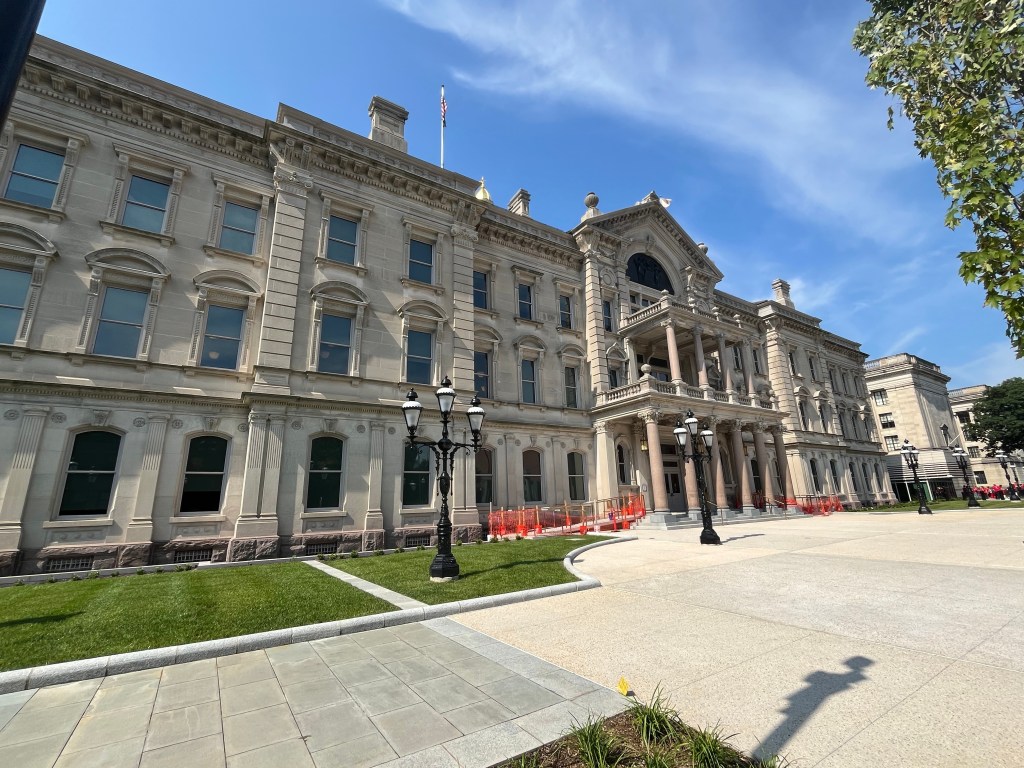
I followed south along the Delaware River into Trenton and drove past the State House, while there was a minor (and peaceful) protest being staged on the grounds. I continued south and crossed the Delaware Memorial Bridge into the state of Delaware and visited the First State National Historical Park. This was initially created as First State National Monument by President Barack Obama under the Antiquities Act in 2013, and the park was later redesignated as First State National Historical Park by Congress. The latter act was buried in a 1200-page defense spending legislation in 2014 after the Delaware delegates argued that their state was the only one of the 50 states that did not have either a national park or a national historical park. Consistent with Delaware’s small size, there is not a lot to see at this park. It gets its designation as the “First State” because the Delaware Colonial Assembly was the first such body to vote in favor of declaring independence from Great Britain on June 15, 1776. Oddly, that vote also included a declaration of independence from Pennsylvania, which it was part of up to that point. The other unique thing I learned was that in 1972, Delaware was the last state to abolish whipping posts, which were used as public punishment for crimes such as burglary. The last actual whipping was administered in 1952.
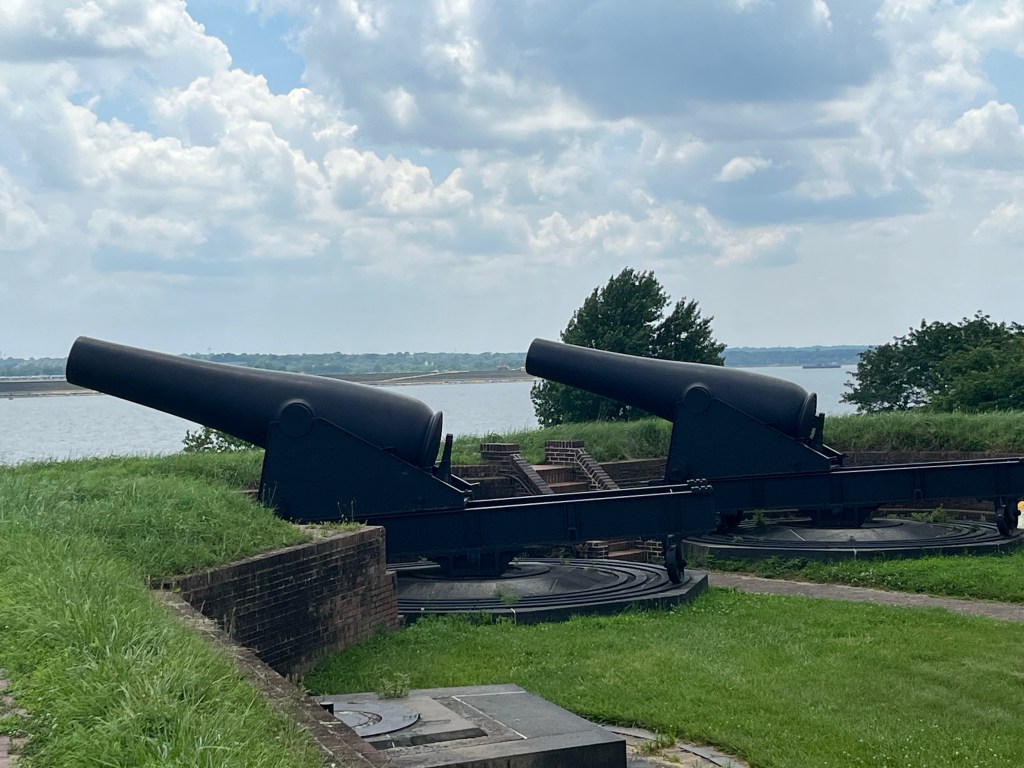
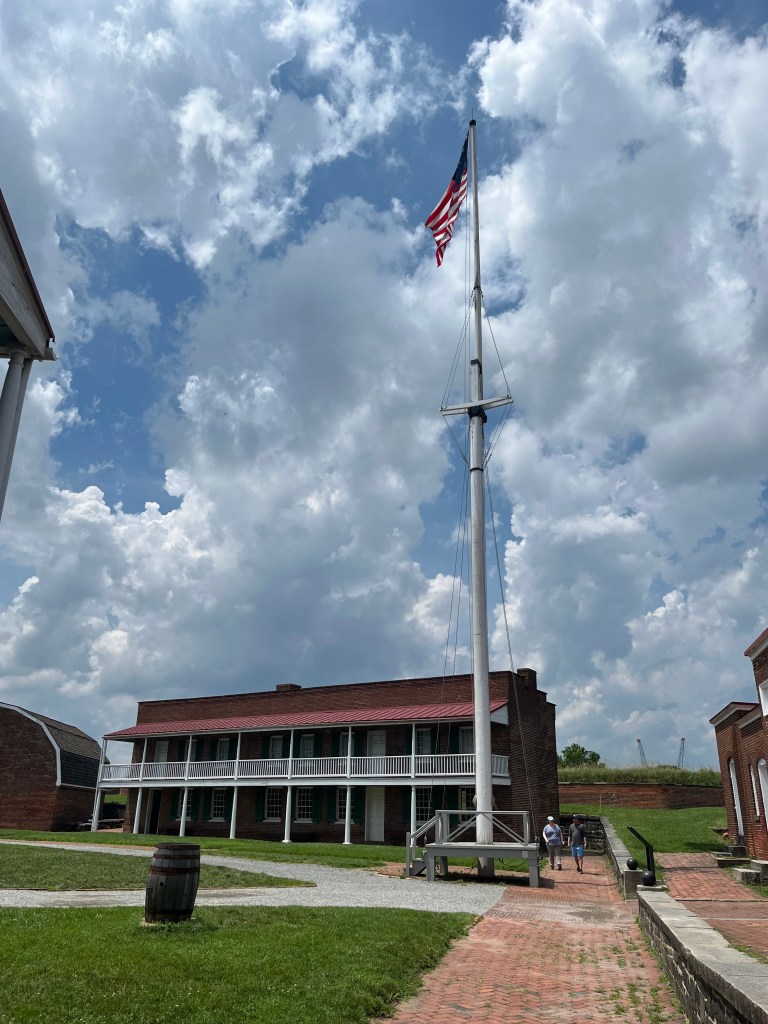
I continued west and stopped at the Fort McHenry National Monument and Historic Shrine outside Baltimore. Much of the original pentagon-shaped fort is still intact, with displays and exhibits in buildings that were once barracks and storehouses. This fort was built in 1798 and is the site of the successful defense of the Baltimore Harbor against an attack from the British Navy from the Chesapeake Bay during the War of 1812. A small American Flag was flown over the fort on September 13, 1814, and a much larger flag was raised to celebrate victory the following day. Of course, the sight of the raised flag inspired Francis Scott Key to write the poem “Defence of Fort M’Henry.” Oddly, the poem was set to the music of a British parlor song to become the Star-Spangled Banner, our national anthem.
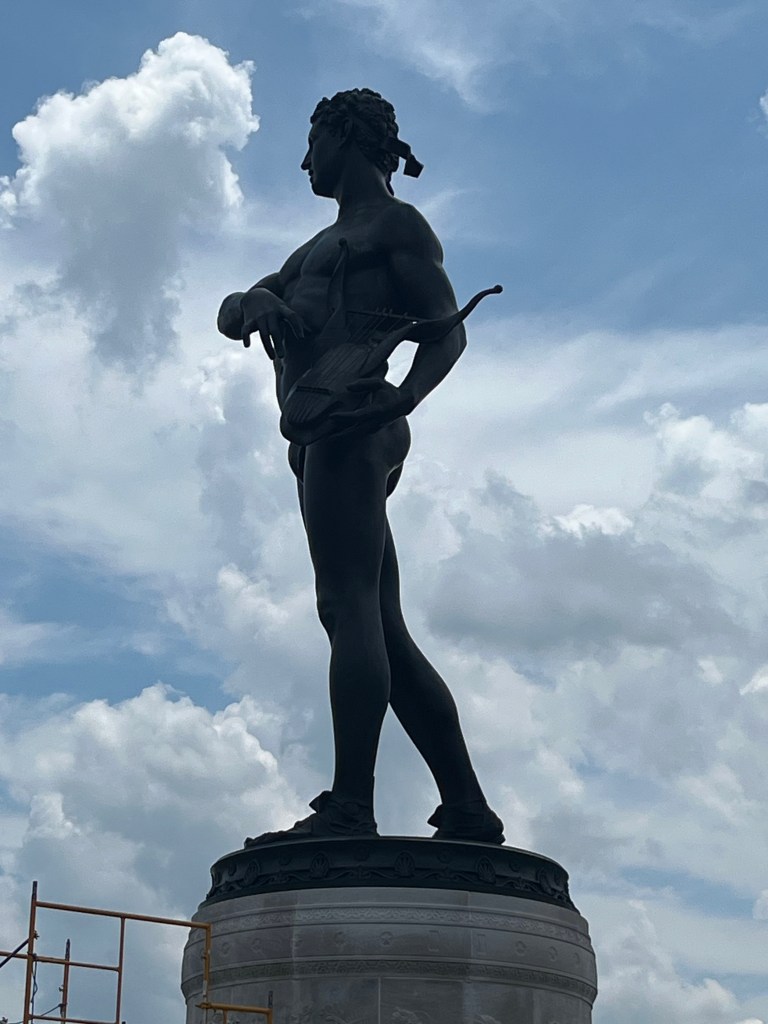
Perhaps the strangest thing at Fort McHenry is a very large statue of Orpheus, the Greek mythological hero of music and poetry. When Congress appropriated funds in 1914 for a monument at the fort (to celebrate the centennial of the battle), they held a contest for soliciting ideas for the monument, and Orpheus was selected from among 34 entries. At the base of the monument is an inscription that reads: “To Francis Scott Key – Author of the Star Spangled Banner and to the soldiers and sailors who took part in the Battle of North Point and the defense of Fort McHenry in the War of 1812.”
From the fort, I could also see the Baltimore Harbor, including the Francis Scott Key Bridge which connects Hawkins Point and Sollers Point across the Patapsco River. This was a major route for traffic from DC up to the northeast. The bridge collapsed 15 months ago when a commercial cargo ship lost power and struck a support column. The bridge has yet to be repaired, and a very large segment is still completely gone.
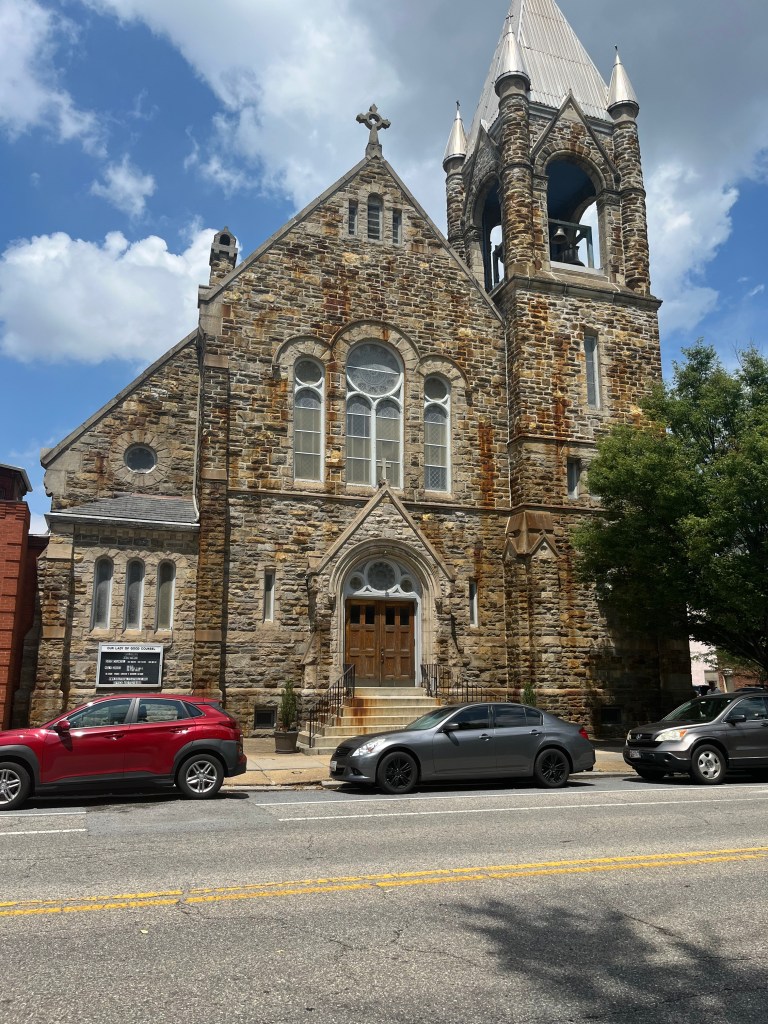
As I left the fort, I passed an interesting church just outside of the entrance. Our Lady of Good Counsel Church was constructed in 1880. But the parish was initiated in 1855 and the first pastor, Fr. James Gibbons, later a Cardinal, served as both the pastor of the parish and as chaplain at Fort McHenry during the Civil War, ministering to soldiers and prisoners.
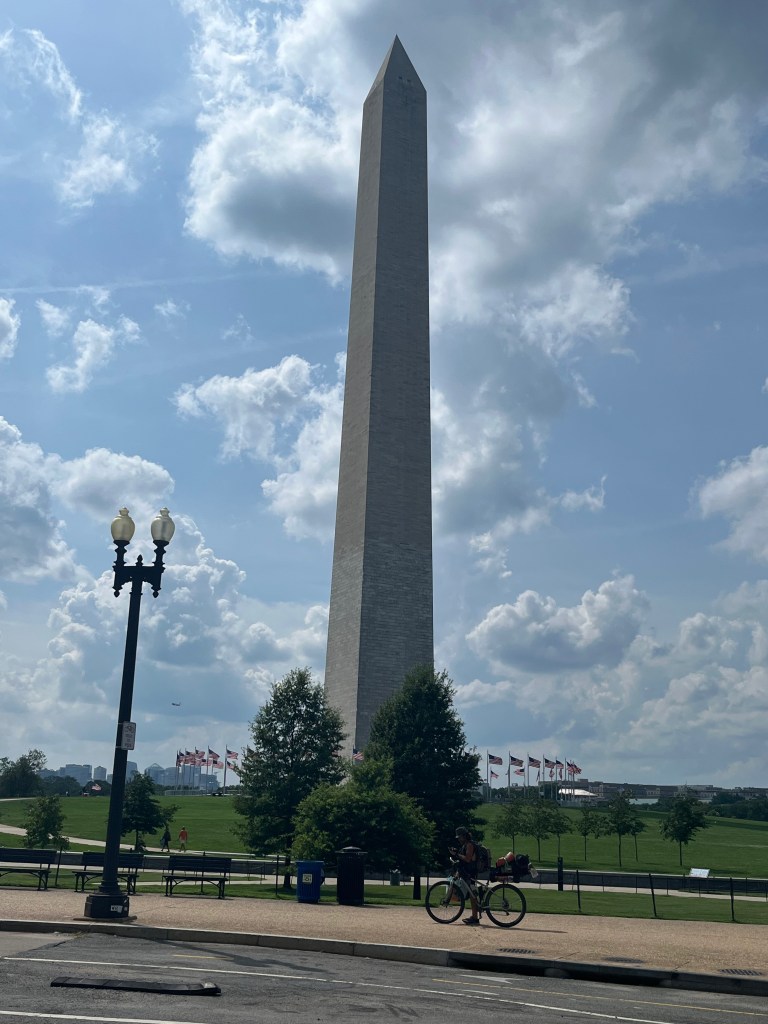
From there I drove west through Washington D.C. and took a photo of the Washington Monument to mark the completion of my goal, as I now have visited each of the lower 48 states. I continued the short distance left to reach my home in Fairfax, Virginia.
I still have one last trip, as I will travel the next day to camp at Assateague Island National Seashore with my daughter, Ashleigh.
Posted photos include the Trenton State House, the Fort McHenry cannons and barracks, the Orpheus Statue, the church and the Washington Monument.
 Discover America 2025
Leave a comment